Sunday, March 26, 2006

Gualandi Volunteer Service Programme, Inc (GVSP)
The Lay Mission Program of the Gualandi Mission for the Deaf

Brief History of the Mission for the Deaf and GVSP

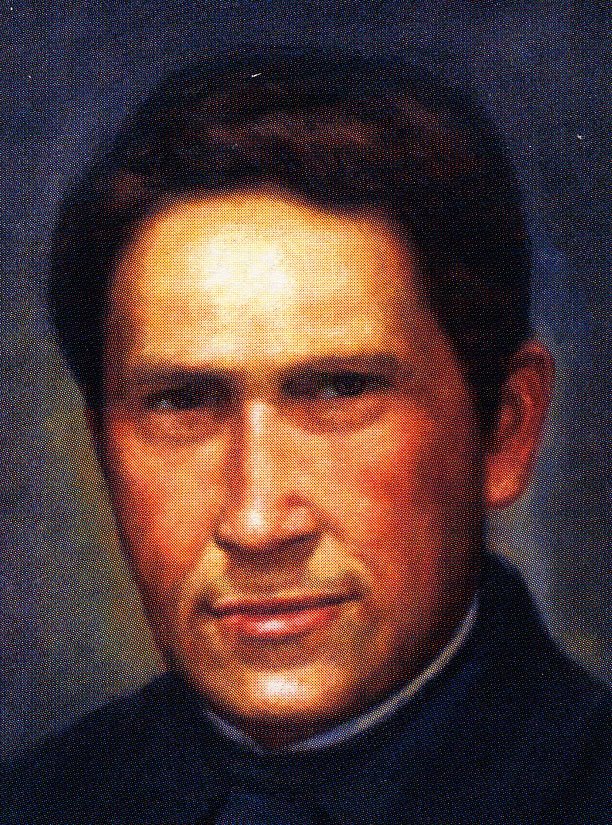
The Gualandi Mission for the Deaf was founded by Venerable Joseph Gualandi in Bologna, Italy and was officially established in 1872 as a religious congregation of Priests, Sisters, Brothers, Deaf Sisters, and Deaf Brothers. From Italy, the Mission spread to Brazil in December 1973 and to the Philippines in Cebu and Manila in October 1988. The members of the Congregation, called the Gualandians whose mission is to enable the Deaf to grow and develop as independent, integrated, fully human and empowered citizens in the hearing society and in the Church, have established the Gualandi Social Center for Deaf to meet the socio-economic, educational, and psycho-spiritual needs of the Deaf. Part of the program is the Gualandi Volunteer Service Programme (GVSP), whose raison d'être is to train and form volunteers and/or Lay Missionaries so as to augment human resources for the delivery of service to the Deaf Community.
GVSP is the lay mission arm of the Congregation of the Mission for the Deaf in Cebu City, Philippines. It was conceived on the 15th of August 2004 by a small group of volunteers already working side by side with fathers, brothers and sisters of the Mission for the Deaf in Cebu City. GVSP came into being in a seminar workshop on Volunteer Program Development and Management sponsored by the Voluntary Service Overseas-Bahaginan (VSO Bahaginan) held at Searsolin, Xavier University, Cagayan de Oro City, Philippines last August 2004, together with six other organizations aspiring to set-up or strengthen its existing volunteer programs.
The representatives and volunteers from the Gualandi Mission for the Deaf who attended this seminar came up with the idea of strengthening the existing volunteer group of the Gualandi Mission for the Deaf by creating a program or structure for the volunteers of the Mission for the Deaf, giving birth to what is called now as the “Gualandi Volunteer Service Programme” or “GVSP”; namesake of the founder of the Congregation of the Little Mission for the Deaf; Venerable Fr. Joseph Gualandi.
After some series of workshops, consultations, coordination meetings, retreats and group reflection, the Gualandian Volunteers decided to formally register the group and to take up a legal identity of its own apart from the Gualandi Mission for the Deaf. GVSP is legally recognized by the Republic of the Philippines under the Securities and Exchange Commission (SEC) as a non-profit, non-stock organization. GVSP is officially registered at SEC under the categories of Religious/Faith-based and Volunteer Service Program organization.

The following is the beacon that guides GVSP in its work and programs…

GVSP Vision
A group of volunteers who in being fully human and fully Christian share a love-life relationship with the Deaf as a Friend and Sister/Brother.

GVSP Mission
To enable the Deaf to grow and develop as independent, integrated, fully human, fully Christian and empowered citizens in the hearing society and in the Church through volunteering efforts.

GVSP Goal
To establish a pool of volunteers/lay missionaries who are able to discern, internalize, and articulate his/her response to God from a free decision to total personal commitment as volunteers for/with/to the Deaf.

GVSP Core Values
The GVSP aims to train and form lay volunteers with the necessary knowledge, skills and values to become competent & creative persons; who are open to change; having a deep sense of justice and faith bringing about communion expressed in their concern and commitment to the service of the disadvantage especially to the Deaf.”

Objectives
This volunteer service program provides a system for recruitment, assessment & screening, training & formation, placement monitoring and regular evaluation for the volunteers with the main aim of helping the volunteers to:
  1. deepen the volunteer’s acceptance of self and others and to develop inner freedom to make a responsible and permanent commitment as volunteers.
  2. develop the volunteer’s being as a person-for-others in relationship with the Deaf, with fellow volunteers, co-workers, and the people of God as a whole.
  3. deepen the volunteers’ conviction to serve and love unconditionally so as to intensify her/his appreciation and exercise of her/his volunteer involvement especially her/his work with the Deaf.
  4. provide support system and continuing education for volunteers

Our Program/Work and Activities

Gualandian Volunteers work by helping or assisting in different programs, fields & areas of concern such as:

  • Pastoral programs and activities of the Gualandi Mission for the Deaf
  • Managing Deaf Ministries
  • Deaf Community Organizing
  • Capacity building of Deaf Organizations
  • Deaf Rights Advocacy
  • Deaf Education (formal, non-formal & catechism/religious instructions)
  • FSL Interpreters of the Deaf
  • Liturgical Activities for the Deaf
  • Human Resource such as facilitators, logistics, coordinators for seminars, workshops, retreats and recollections and Deaf camps

These Gualandian Volunteers works as deaf ministers, sign language interpreters, teachers and educators of the deaf, advocates for and of Deaf Rights and among others.

--------
if you want to know more about us and our work, contact:
MR. JOHN PAUL E. MAUNES
Program Manager
Gualandi Volunteer Service Programme, Inc.
# 5 Emerald Street, St. Michael Village,
Banilad, Cebu City,
PhilippinesP.O. BOX 650
Tel. No. 032- 231-2601
Fax No. 032- 231-2118

Saturday, March 25, 2006

A HISTORICAL SURVEY OF DEAF MINISTRIES IN THE VISAYAS AREA
by Peter Miles Sollesta, PMS
I. Introduction: Ephphatha! Be Open! Are you?

"He has done all things well; he even makes the deaf hear and the mute speak"
- Mark 7:37

The task of proclaiming the Good News to men was entrusted to the Church. As he had been sent by the Father, the Son himself sent the apostles (cf. Jn. 20:21) saying, "Go, therefore, and make disciples of all nations, baptizing them in the name of the Father, and of the Son, and of the Holy Spirit, teaching them to observe all that I have commanded you; and behold I am with you all days even unto the consummation of the world" (Mt. 28:18-20). Jesus’ whole life and ministry was center in the proclamation of the good news of the Kingdom of God. As Jesus himself would say, “I must preach the good news of the kingdom of God for I was sent for this purpose” (Luke 4:42). With these words, the Church is for all intents and purposes missionary. As the universal sacrament of salvation, she is sent to the entire world to bring the good news of the Kingdom of God to all men being obedience to the command of its founder, "Go into the whole world and proclaim the gospel to every creature (Mark 16:15). Lumen Gentium 17 clearly states the missionary activity of the Church. The Church has received this solemn command of Christ from the apostles, and she must fulfill it to the very ends of the earth (cf. Acts 1:8).

With this, the church is facing a great challenge of spreading the gospel to all creatures, (and at this point I would say) …including the Deaf. When Jesus gave “The Great Commission,” the Church defined this to mean delivery of the Gospel in other languages to other lands. Numerous churches are expending vast amounts of resources in foreign missions, while overlooking uncharted territories or "home mission groups" within their own area of influence. The Deaf[1] community is such a group that needs to receive the Gospel in its own language. There are now a large number of Deaf people that society and the Church does not know of. The Network for Strategic Missions reported that out of the 278 million individuals in the United States today over 16.6 million are Deaf or Hard-of-Hearing, whereas globally their numbers exceed 364 million.[2] The National Statistic Office during the 1995 census of population reported that there are 115,000 Deaf and Hard or Hearing individuals in the 68.6 million populations in the Philippines.[3] A study conducted by the Congregation of the Mission for the Deaf resulted to a ratio of two deaf people per 1000 population (2:1000) here in the province of Cebu. The demographical result of deafness is much higher compared to the epidemiological ratio of 1:1000 in the whole world.

In the gospel of Mark, we can see that Jesus heals a deaf person. With this great miracle, Jesus was able to impart to the Deaf person the gospel of salvation by opening his ear and loosening his tongue. "Ephphatha, be opened!" (Mk 7:34). The words spoken by Jesus at the healing of the deaf-mute ring out once more for us today, they are stimulating words of great intensity, which call us to open ourselves to listening and to bearing witness to the gospel. The challenge for us is whether or not we heeded the missionary call of Jesus of letting the Deaf hear his gospel. This would go back again to my question of how well is the church in fulfilling her missionary task and responsibility towards the evangelization of our Deaf brethren. As St. Paul would say, “faith comes from hearing” (Romans 10:17). How could our deaf brethren develop a sense of faith in our Lord Jesus Christ and a sense of belongingness in the body of Christ if the church lacks in the fulfillment of her duty to these kinds of people with special needs.

This paper hopes to accomplish its task by making a survey the different Deaf Ministries in the Archdiocese of Cebu and its Suffragan Dioceses, examining the historical development of these ministries with a hope that it would shed light to the queries whether the church has heeded enough to the call of Christ to bring his gospel to all creatures including the Deaf.

II. Who are open?: A Survey of Deaf Ministries in the Archdiocese of Cebu

To limit the scope of this paper, I decided to pursue this historical survey on the Archdiocese of Cebu. The Archdiocese of Cebu is composed of four Suffragans namely the Dioceses of Maasin, Dumaguete, Tagbilaran, and Talibon. After gathering some information through the office of each of these Dioceses, I found out that not all of them have diocesan or parochial programs for their Deaf faithful.

The Archdiocese of Cebu has the largest Deaf Ministry Program in the Visayas Region. This is due to the presence of the Gualandi of the Mission for the Deaf, a Religious Congregation of Priest, Brothers, and Sisters working solely for the socio-educational and religious welfare of the Deaf. The Congregation started in Bologna, Italy in 1872 and came here to the Philippines last October 1988. The Mission was responsible for many programs for the Deaf not only in Cebu but also to the neighboring islands. Though, it is not an archdiocesan program in the strict sense of the word, it has help in the pastoral care of the Deaf in the archdiocese. The Deaf Ministry program involves Sunday Masses for the Deaf, retreats, recollection, Deaf camps, and other religious activities. As of now, four parishes have Sunday masses for the Deaf and the Congregation is taking care of the religious/catechetical instructions of twelve SpEd Centers for the Deaf.

Rev. Fr. Raul Ragay, one of the priests of the Mission for the Deaf, started the Dumaguete Effata Association of the Deaf in the Dumaguete City last 2002. This association is considered a Deaf Ministry under the guidance of Bishop John Du of the Diocese of Dumaguete. As a Catholic Deaf organization, it volunteers and officers are responsible for the pastoral program and activities of the Deaf in Dumaguete City and neighboring towns.
The St. Joseph Foundation for the Deaf, Inc. chaired by Rev. Fr. Victor Bompat, is the organization that serves as the Deaf Ministry in the Diocese of Tagbilaran. This organization that started four years ago, was the initiative of the SpEd teachers for the Deaf at Tagbilaran Elementary school. This Foundation is taking care of the pastoral programs and activities of the Deaf in Tagbilaran City like a regular Sunday mass at Cogon Church with Fr. Bompat as their signing priest. On the other hand, the Diocese of Talibon have neither an existing parochial nor diocesan program for Catholic Deaf Community in their Diocese. The same also with the Diocese of Maasin and their main reason is that there are no individuals or sectors interested to start such Ministry. There are no interested priest or other religious people knowledgeable with sign language and courageous enough to cater the needs of the Deaf in the Diocese.

III. Historical Background of Deaf Ministry in Archdioceses of Cebu

The development of the pastoral work for the Deaf in the above-mentioned Dioceses are closely linked to the existence of the organizations having this pastoral work is done in their Dioceses. On this portion of the paper, I will try to elucidate the historical beginning of the three organizations that are doing pastoral work with and for the Deaf in their respective Dioceses.

The first would be the Congregation of the Mission for the Deaf, located at St. Michael Village, Banilad, Cebu City. It is an Italian religious congregation of priest, brothers, and sisters founded in Bologna, Italy by Venerable Giuseppe Gualandi in 1872 with the charism of educating the Deaf sequentially to evangelize them. In the year 1988, the General council decided to start a Mission House in the Asian and African Regions, hence they choose Philippines and Zaire as their missionary focus. Fr. Antonio Loreti and Mother Severina, then Superior Generals of the Congregation, came to Manila early of 1988, looking for vocations and a place where the Mission can begin its missionary work. In the middle of the year, Fr. Antonio Loreti received the letter of invitation by Cardinal Vidal and from the parents of some Deaf kids here in Cebu, after knowing the presence of the congregation in the Philippines. Fr. Loreti went to Cebu heeding the invitation of Cardinal Vidal and on October of 1988, Fr. Loreti with Fr. Savino Castiglione came to Cebu to establish a mission house. They were accommodated first by the Onglatco Family then later transferred to Sepulveda Street renting a house own by Paul Pelaez.
The work for the Deaf started during this year. Around this time there are 12 seminarians living with Fr. Savino at the House in Sepulveda. Br. Antonio was the first Filipino to be sent to Italy for his formative years. However, during the span of 13 years, the congregation has only produced two Filipino religious: a brother and a priest. Fr. Raul Ragay was the first Filipino priest of the congregation ordained last November 1994 and Br. Antonio Rodrigo was the also the first religious brother who made his perpetual vow last may 1992. In the span of these years, though many young men enter the congregation they were not able to persevere in their vocations. It was only in 1999 that Peter Miles Sollesta made his first temporary profession making now three Filipino religious. At the present, the religious community of the Mission for the Deaf is composed of the three together with six young men undergoing religious formation.

During the first years of Fr. Savino, he went around the different SpEd Centers all-over Cebu, extending his help to Deaf schools like providing religious instructions to the Deaf and scholarship to the Deaf. Sunday Mass in sign language was celebrated in the house wherein the Deaf gathers. The Deaf there were given free lunch after which they are activities and catechism classes organized for them. Due to persistent cases of robberies in Sepulveda, in 1990 the congregation bought a piece of land at St. Michael Village, Banilad owned by Juan Rafols. The construction of the formation House and Social Center for the Deaf was started that year and two years later was finished and blessed by his eminence Cardinal Vidal. This Center serves as the focal point of the pastoral work and ministry with, to, and for the Deaf here in Cebu. It was an instrument for the education and evangelization of the Cebuano Deaf. Every Sunday the Deaf comes here for their Sunday Mass, have lunch and have programs of activities in the afternoon life, non-formal classes, sports activities, and catechism classes. It is in this Center that the Mission held yearly retreats and recollections for the Deaf. They are also served as the medium for giving livelihood training and facilitating job placements to numerous unemployed Deaf individuals. One of the major programs of the Congregation is sponsoring deserving Deaf students to school by giving transportation, uniform and monthly allowance to sponsored kinds. As of now, the Congregation is sponsoring 573 Deaf kids in school. In addition, the Mission is giving free medical and dental services to those indigent Deaf.

Last September 2000, the religious community met together to discuss why are there only few Deaf who attends in the Sunday Mass held at the Center. It was later realized that the Center is not accessible to many of the Deaf here in Cebu. Therefore, the decision was to extend the ministerial of the Deaf in the parishes. The decision was to have Masses in sign language to strategic Parish Churches that would be accessible to the Deaf. So without any delay arrangement was done and that month Holy Mass in the parish of Minglanilla, Fatima Basak in Mandaue, Redemptorist Church, Sto. Rosario Parish and Our Lady of Lourdes in Labangon are interpreted wherein around three hundred Deaf people flock the church every Sunday to attend the Mass. However, since the number of Deaf people attending in Redemptorist Church declined, it was decided to discontinue interpreting in the Sunday Mass and has the Deaf transferred to the nearest parish. Currently, the Deaf are still served by the mission not only on their spiritual life but also in the socio-economic and educational needs.
On the other hand, the Deaf ministry in the Diocese of Dumaguete is still young. Even since the arrival of the Mission for the Deaf in the Philippines in 1988, the Deaf in the neighboring provinces have been also the recipient of the many kinds of assistance offered for their social, educational, and spiritual welfare. The Deaf in Dumaguete, in particular, have received financial assistance in their study through the Mission scholarship program. A social center for the Deaf was constructed in Junob, Dumaguete in March 1994 with the support of Bishop Lagdameo. It has been used during summertime as a dressmaking training facility for the deaf occasionally other social activities with the Deaf have been held there.
During the holy week retreat for the Deaf in 2002 held in Bacong, Negros Oriental; the DEAF (Dumaguete Effata Association of the deaF) was established through the initiative of the Mission for the Deaf, through Fr. Raul Ragay and the Apostolic Movement of the Deaf (MAS) in Cebu City. Since then the DEAF has been instrumental in the realization of the many religious and social activities for the Deaf in Diocese of Dumaguete, like catechism classes, first communion and confirmation celebration, retreats and camps and festive gatherings.
In July 16, 1999, the Securities and Exchange Commission (SEC) approved the St. Joseph Foundation of the Deaf, Incorporated chaired by Rev. Fr. Victor Bompat, a signing priest who is currently assigned in the Immaculate Heart of Mary Seminary, of the Diocese of Tagbilaran, Tagbilaran City, Bohol. Before the existence of the Foundation, there are no Catholic Deaf Ministries existing in Bohol. Upon the arrival of the Baptist mission brought by an American Peace Corp volunteer, in the person of Dennis Drake, the Deaf spiritual needs are catered by them. Since there are no religious activities in the Catholic Church that is accessible to the Deaf, most of them started to join in the Baptist group.

Teachers for the Deaf in Tagbilaran City SpEd Center observed that their mostly catholic Deaf students are now attending bible classes, religious services of these non-catholic religions. The teachers concerns grew bigger when they discovered that their Deaf students started to be baptized into the Protestantism and Baptist Churches. They were more alarmed when those Deaf coming from catholic families starts to criticize Mother Mary, the priesthood, the Catholic Church, and its practices. The teachers started to contemplate on the need to remedy the situation and win back the faith of the catholic Deaf. The teachers headed by Mrs. Diosy Ramos, a high school teacher for the Deaf started to organize themselves to interpret the Sunday Mass for the Deaf. But, there was a felt need to do more effort because the Baptist groups are very strong. Religion instruction was needed but since regular religion teachers, due to lack of sign language skills, exclude the Deaf in their classes and the schoolteachers cannot handle religious instruction, nobody would do it. With this situation at hand, the teachers discussed to Fr. Victor Bompat the urgent need to address this situation. Fr. Bompat responded by organizing themselves of which they call, St. Joseph Deaf Foundation, Inc. in honor of Tagbilaran’s Patron Saint. This foundation serves as the Deaf Ministry in the Diocese of Tagbilaran having their office at the Bishop’s Residence.

The Foundation is instrumental for catering the spiritual needs of the Catholic Deaf in the Diocese by having Sunday Masses in Cogon Church officiated by Fr. Bombat in sign language. They also give Sunday catechism classes, sponsors retreat, recollections, and camping for the Deaf. They give financial support or scholarship for education, vocational and skills training of deserving Deaf, facilitate in job placement to graduates and qualified out of school deaf youth.

IV. Why have we not opened enough?: Implications and significance of the Church’s Deaf Ministries in the Philippines today.
"I came, I saw, but I heard absolutely nothing"
- Theme of the 10th Congress of the International Federation for
Pastoral Care to Hearing Impaired Persons at Samaritterhjemmet
17th - 18th March 1999

"Go into all the world… and pronounce the good news to all people." That is the task Jesus gives us. This "all people" means not only people of various nations and continents but also the fellow human being who, due to a disability, is more or less prevented from participating in the life of our parishes and church activities. As church, as sisters and brothers of Jesus, we must pay heed so that nobody is excluded from the Kingdom of God or is in any way discriminated against. This applies especially to disabled persons. Deafness is a disability (though Deaf people would not call themselves as disabled), which is often concealed by the afflicted person and thus easily ignored by the surrounding society. In the Gospel, we repeatedly hear that Deaf persons are healed. Jesus took this disability seriously. He knows that it can reduce the quality of life. Therefore, he was particularly close to those persons.

In out own local set-up, the urgent need and the constant call on the Philippine Church to be the “Church of the Poor” is very much concrete and real nowadays (PCP II 122). PCP II hopes that the Philippine Church is a Church in solidarity with the poor. This task of communion with the poor does not only mean to those people who are materially poor but also with those who are afflicted by human misery, suffering and destitution (PCP II 130). With this, we can say that people who are suffering from disability and are handicapped belong also to this category of “poor” that PCP II is reiterating. Given such perspective, we can say that PCP II is calling the Philippine Church to be also in solidarity with these unfortunate and disabled brothers and sisters of ours. Considering Deaf people as the poorest among the “poor”, I would say that there is also an urgent call in the Church to take care of the needs of the Deaf and of other people with disabilities. The Church has taken great care to announce the Good News that the life of each person with a disability is sacred and precious notably in Pope John Paul II's 1995 letter, Evangelium Vitae. The response of many of our dioceses and parishes in the Philippines Church to Catholics with disabilities, however, gives a poor witness to the Gospel of Life.

Considering our Lord's Gospel of Life, it would be reasonable to assume that people with disabilities would feel more welcomed within our parishes than within the world in general. However, in reality, we can see that Catholics with disabilities are much more likely to be inactive Catholics than their non-disabled counterparts in our dioceses and parishes, because our church is not ready for them. One good reason is that there are no personnel, which means that there are no priest, religious or lay church workers competent enough in these field of pastoral work. Such was a majority comment of the person I talked to in the Dioceses of Talibon and Maasin, which do not have a Deaf Ministry. This also holds true in the parishes here in the Archdiocese of Cebu in which we are encouraging them to start a Deaf Ministry in their respective parishes wherein there is a big number of Deaf in their area.

The absence of Deaf ministries in the local churches in very detrimental to the faith of the Deaf, since how can they call to Him for help, if they have not believed? Moreover, how can they believe if they have not heard the message? And how can they hear if the message is not proclaimed? And how can the message be proclaimed if the messengers are not sent out? As the Scripture says, "the foot step of those who bring the good news is a welcome sound" (Rom. 10: 14-15). Like their handicap, the Deaf people are hidden. They are not visible in a crowd or stand out as the blind or those with orthopedic handicap do, except when they begin to communicate. We should not forget the fact that they are not only equal in all respects but also normal in all aspects, just like any other member of the community. The difference is that they do not hear. There is still the need to bring them into the mainstream of our parish community and address their special needs.
Significantly, I notice that many of the parishes here in the Archdiocese and its Suffragan are hesitant to the reach out to these Deaf individuals or communities. It is because that they themselves are either not competent in their skills nor they have sufficient staffs and personnel ready and willing to work for these people with a special need in their parish and try to mainstream them in the congregation. What is the implication of such realistic comments coming from the people working in the Church? What we have here are people looking for training and skills in special ministries. Since Deaf people are people with special needs, people that will be working with and for them should be properly trained. Priest, seminarians, nuns, and church lay leaders are at least informed and knowledgeable to some degree about Deaf Ministry and other special ministries.

The challenge here is education; we have to teach our servant-leaders the proper skills and expertise needed for such special ministry. This initiative should start from the Diocese itself by creating a diocesan office that would look after the needs of special people. This office will be responsible for encouraging parish priest to start special ministries in their parish and implementing diocesan-wide programs for the disabled with the support, of course, of the Bishop. The Diocese would see to it that its seminaries must have pastoral programs that would expose seminarians to special centers, schools, and organization of disabled people. The St. Joseph Regional Seminary in Jaro, Iloilo City has this similar program, wherein, seminarians that chose to work with special kids like the Deaf and blind are being expose every week as part of their pastoral formation. Seminaries, as part of their pastoral programs, should have their seminarians taught sign language (as what the seminarians in Tagbilaran are undergoing) and braille writing as part of the training in special ministries and be expose to deaf, blind or other disable groups and teach them catechism (like in Jaro). A seminarian, well trained and well informed about the needs of these special people would later become a priest who is pastorally aware of the significance of special ministries in his parish.

In the parish level, the parish priest should create programs in his parishes such as awareness seminars and programs to help the parishioners realized that disable people are also members of the mystical body of Christ, letting them aware of their special needs and challenge them to do something about it. There should be programs that would tap existing agencies that are involved with these special groups to help the parish in facilitating their activities for deaf and other disabled people. Furthermore, though catechetical instructions are provided by the parish to nearby public schools ironically, catechist disregard the special centers in the public schools since they are not equipped with proper skills and training to deal with this kind of people in the first place. Such nonattendance should be always be keep in mind or else without proper people teaching the Deaf around the truths of our faith, we will have Deaf who are either infidels or non-Catholics. An important more would be to create a group of catechist set aside and trained for giving catechetical instructions to people with special needs. The parish could sponsor a basic sign language course for its catechists who are interested to teach Deaf kids.

One important aspect in Deaf Ministry also is to cater the needs of the Deaf in their sacramental life! Our parishes and local churches should provide sacraments readily available and accessible to their Deaf parishioners. There should be Sunday Masses in the parish wherein the priest signs or if not should have sign language interpreters for the Deaf parishioners going to their church. While blindness as a disability cuts blind people from things, it does not cut them from people, while deafness do. Blind and orthopedically handicapped people can be easily mainstream to the parishes with minimal adjustment like accessibility and the likes, the Deaf community, however, is complicated when it comes through mainstreaming into our local church because of the language. Deaf persons feel a strong identification with the sign language as their language. A mastery of sign language with its subtle nuances and graceful fluency is a must for any person wishing to do meaningful pastoral service for the Deaf. Voltaire says that the ear is the road to the heart. Sign Language is more visual but it is taken to the heart by the Deaf. The moment the Deaf know that we are able to converse in their language, the sign language, we will be able to win their respect and confidence.

Exclusion of persons with deafness or other disabilities from church activities and church ministries in most cases are not intentional, but it occurs because people are either unaware of the needs and their means to meet these needs. It is our job to enthusiastically take a role in initiating the inclusion of children and adults with disabilities, and their families into the mainstream of our local church.

There are many implications for priest, nuns, and other church workers regarding those families whose children with disabilities are living at home, hidden from the mainstream of the church. The challenge of the local church is to locate these families, welcome them into the parish community, and then enable them to participate in the life of the church especially in the celebration of the Eucharist. It is said that a child with a handicap makes a handicapped family. The disability not only affects the child but also the whole family. So it becomes imperative that the Catholics of a parish under the initiative and leadership of their priest goes in search of those persons who are most in need of pastoral care.

V. Conclusion
Our care for the Deaf should not be confined or limited to just advocating their rights of health services and accessibility but should permeate through the fabric of our Church community. We read in the gospels that every time Christ touched those with disabilities and healed those with illness, he was setting a model to be followed in our pastoral care for the handicapped. Justice and love will triumph only when the segregating walls are knocked down, the communication barriers removed, our churches and altars become more accessible to the handicapped, and the Good News is heard by all including the deaf. In accordance with the call of the Holy Father and the call of the PCP II, it is not enough merely to affirm the rights of the Deaf, but we as the people of God must actively work to realize these rights in the fabric of our parish community, and society.

---------------------------------

[1] The word Deaf (with the capital letter D) referred here is a politically correct term denoting to those individuals that are born with hearing impairment, or deafened at a very early age which has sign language as his/her first language. These Deaf are considered belonging to an ethno-cultural linguistic group. Late and adventitious deafened people are not considered in this category.
[2] http://www.tfwm.com/twm/articles/general/0501_Kogelschatz.html
[3] Source of data taken from the Philippine Federation of the Deaf Office.
Volunteer Motivators

What makes Volunteers volunteer?

  1. Plan annual ceremonies to recognize volunteers.
  2. Rely on them in an emergency situation.
  3. Give them the honor of meeting with higher-ups.
  4. Recognize personal needs and problems.
  5. Take time to explain things fully.
  6. Put up a volunteer suggestion box (and answer all suggestions)
  7. Provide training.
  8. Mention them in media coverage.
  9. Greet them by name.
  10. Ask them for a report.
  11. Give them challenging assignments.
  12. Trust them with additional responsibility.
  13. Be familiar with details of their assignments.
  14. Honestly confront them when you have a problem with them.
  15. Let them know they were missed if absent.
  16. Send letters of commendation to their employers.
  17. Recognize a volunteer in each newsletter.
  18. Recognize a "volunteer of the month".
  19. Hold exit interviews and say "thank-you".
  20. Conduct regular conferences and evaluations.
  21. Accept and be thankful for their individuality.
  22. Be genuine, let them get to know you.
  23. Praise them in front of others.
  24. Serve as a volunteer yourself, to stay in touch.
  25. Carefully match the volunteer with the specific task.
  26. Nominate them for volunteer awards.
  27. Get their input on difficult issues and policy decisions.
  28. Send cards on special occasions.
  29. Ask them for suggestions on their job design.
  30. Use them as consultants.
  31. Equate volunteer experience with work experience.
  32. Be prepared for meetings.
  33. Ask them (informally) for their suggestions on important topics.
  34. Value their time.
  35. Take time to talk with them.
  36. Ask them to help train others.
  37. See that they grow on the job.
  38. Let them grow out of a job.
  39. Start and end on time.
  40. Prepare and distribute meeting agendas ahead of time.

Volunteer Rights and Responsibilities
from PAVE Volunteer Management Training Kit

As a volunteer, you have the right to:

  • receive accurate information about the agency.
  • receive a clearly written comprehensive job description.
  • have an understanding of lines of accountability.
  • be seen as belonging, through inclusion at meetings, social functions, etc.
  • be seen as a person. To be supported in your role.
  • receive training; both initially and on an ongoing basis.
  • be trusted with confidential information if it is necessary in order to carry out your job.
  • be safe on the job. To be covered by insurance.
  • have choices and feel comfortable about saying no.
  • not to be exploited.
  • be informed of the organization's policy on reimbursement of volunteer transporation costs.
  • be reimbursed out-of-pocket expenses incurred while on the job.
  • be consulted on matters which directly or indirectly affect you and your work, and be involved in decision making.
  • clear grievance and conflict resolution procedures.
  • receive feedback on your work and recognition for your contribution.
  • your personal information being kept confidential.

As a volunteer, you need to:

  • be reliable and arrive on time.
  • be trustworthy.* respect confidentiality.
  • respect the rights of people you work with.
  • have a non-judgmental approach.
  • support the agency you're working with, and represent its interests.
  • carry out the specified job description.
  • give feedback.
  • be accountable and accept feedback.
  • be committed to the program.
  • avoid over-extending yourself.
  • acknowledge decisions made by the staff, or the organization.
  • undertake training.
  • address areas of conflict with appropriate staff member, the co-coordinator of volunteers, or similar worker.
  • ask for support when it is needed.

Universal Declaration on Volunteering
by International Association for Volunteer Effort

Preamble
Volunteeers, inspired by the Universal Declaration of Human Rights of 1948 and the Convention of the Rights of the Child 1989, consider their commitment as a tool for social, cultural, economic and environmental development in a changing world, and believe that "each person has the right to freely assemble and associate for peaceful purposes.
Volunteering
  • is based on personal motivation and choices, freely undertaken;
  • is a way of furthering active citizenship and community involvement;
  • takes the form of individual or group activities generally carried out within the framework of an organisation;
  • enhances human potential and the quality of daily life, building up human solidarity;
  • provides answers for the great challenges of our time, striving for a better and more peaceful world;
  • contributes to the vitality of economic life, even creating jobs and new professions.
Basic Principles of Volunteering
Volunteers put into practice the following basic principles:
Volunteers
  • acknolwedge the right of every man, woman and child to associate freely regardless of their race, religion, physical, social or economic condition:
  • respect the dignity of every human being and their culture;
  • offer services, without remuneration, to others by mutual effort or by belonging to voluntary organisations in a spirit of partnership;
  • detect needs and elicit the involvement of the community in the resolution of their own problems;
  • may, through volunteering, grow as persons, acquire new skills and knowledge, develop their personal potential, self reliance and creativity, enabling people to take an active role in problem solving;
  • stimulate social responsibility and promote family, community and international solidarity.
Considering these basic principles, volunteers should:
  • encourage the expression of individual commitment through collective movements;
  • actively seek to strengthen their organisations by being fully informed of and adhering to the organisation's goals, objectives and policies;
  • undertake to carry out the jointly defined tasks, taking into consideration personal aptitudes, time available and accepted responsibilities;
  • cooperate in a spirit of mutual understanding and respect with other members of the organisation;
  • undertake training as required;
  • maintain confidentiality in their activities.
Organisations, taking into account human rights and the basic principles of volunteering, should:
  • lay down the policies needed for volunteer activity, define the criteria for volunteer participation and see that the ascribed functions are observed by all;
  • entrust to each person suitable tasks, ensuring appropriate training;
  • provide regular evaluation and recognition of their work;
  • provide adequate coverage and protection against risks to volunteers during the exercise of their duties, and seek coverage for damages that may be caused to third persons;
  • facilitate access to volunteering for all by reimbursing expenses;
  • define the conditions under which the organisation or the volunteer can end their commitment.
Proclamation
Volunteers, gathered at the initiative of IAVE in a world congress,
declare their faith in volunteer action as a creative and mediating force:
  • to respect the dignity of all people and their ability to improve their lives and exercise their rights as citizens;
  • to help solve social and environmental problems;
  • to build a more humane and just world, furthering international cooperation.
Therefore, they invite governments, international institutions, business and the media to join in partnership with them to create a worldwide environment that promotes and sustains effective volunteering by all people as a symbol of solidarity among people and nations.
Paris, 14 September 1990The International Association for Volunteer Effort (IAVE) held its 11th biennial conference in Paris in September 1990, and the assembly adopted this declaration.
Motivating Volunteers: A 4 Step Process

Step 1. Identify the job to be done. Put it in writing so that you have a clear vision of what needs doing.

Step 2. Select the best person or group for the job. List the qualities and experience you desire.

Step 3. What motivates this person (or these people)? What enticed them to succeed in the past? (Recognition, an award, appreciation, a challenge...) See Volunteer Motivators below for a list of probable motivators.

Step 4. Link the desired outcome with the individual's motivator.

Don't Forget! Motivation is no secret weapon. Everything we do is based on motivation. Even those people we call "selfless" and "altruistic" are acting on motivation- the admirable motivation of the "good feeling".

Helpful hints in volunteering!

  • VISIT THE AGENCY you are interested in before committing yourself. Get a sense of the staff, clients, and overall environment you will be working with and in.

  • BE REALISTIC AND CLEAR about the amount of time you can commit. It is easier to start small and increase your commitment than to have to back out because your schedule is overwhelming you.

  • FIND OUT WHAT THE AGENCY'S PURPOSE IS and how your role as a volunteer fits into that mission. Sometimes, what may seem as an insignificant contribution to you makes all the difference to those people or that program you are serving.

  • ASK FOR A JOB DESCRIPTION of your volunteer work. It helps you decide if the work is an appropriate "fit" for you, and provides a set of standards or expectations when you do volunteer. Nothing is worse than setting aside time to volunteer at an agency, only to arrive and find there's nothing to do. A job description goes a long way towards alleviating these blues.

  • ASK ABOUT TRAINING and/or supervision. If an agency is asking you to perform a task, will they provide the necessary back-up for you to be successful?

  • VOLUNTEERING SHOULD BE AN OPPORTUNITY for your personal and professional growth as well. Don't be reluctant to request an evaluation of the work you perform, or a letter of recommendation, should you decide to list your volunteer service as a future work reference.

  • ENTHUSIASM IS THE KEY. If you are not excited about a program, the chances are you are not going to be thrilled with giving up time in your day to go there. GO FOR IT! You get out of your volunteer work what you put into it. Volunteering requires no special degree or prior experience. It's simply a willingness to want to help. The rest will take care of itself.

Tuesday, March 21, 2006

THE TEN COMMANDMENTS FROM A DEAF BEING
  1. I am a proud Deaf Being who brought you out of pure oralism, out of oppression. Thou shalt have no languages but ASL (FSL) and English. Thou shalt use ASL (FSL) through the air and English through reading and writing.
  2. You must not make a likeness of anything on your hands and mangle it, for I am a concerned and caring Deaf Being.
  3. Thou shalt not take my languages and cultures in vain. My world is precious. You must not use it lightly or use it in the making of false hopes.
  4. Thou shalt keep pure the History and Culture of Deaf people.
  5. Thou shalt honor thy mother and father, diverse Deaf role models and hearing allies.
  6. Thou shalt not kill the spirit of the Deaf Community and Culture.
  7. Thou shalt not go back and fourth over the fence. You must stand on your own two feet and make waves.
  8. Thou shalt not steal the languages and cultures of Deaf People not bear false witness against the true welfare of Deaf people.
  9. Thou shalt not covet. Thou must not tell lies about the doings of Deaf people and their hearing allies.
  10. Thou shalt not set your heart on controlling and taking over Deaf people's worked, or to change or destroy anything that belongs to Deaf people.

* My most sincere apologies to those who embrace the Lord and the most sacred Ten Commandments. Adapted May, 1993. By Janet S. Weinstock.


** Extracted from the "Deaf Counseling, Advocacy and Referral Agency" (DCARA) serving the deaf and hard of hearing community: of, by and for the deaf. August 1993 issue.

Interpreting Ethics

People who perform interpretation and who violate the trust placed in them do a disservice not only to themselves but to the whole of this growing profession. Since the profession is relatively young, and most of the occasions for people meeting an interpreter on the job are not in the public eye, a single interpreting assignment is an opportunity for enhancing the lay person's view of interpreters and interpretation.

The Code of Ethics for Interpreters of the Deaf, Inc. simply serves as a reminder of this trust, and as an encouragement for professional treatment of professional behavior. The following principles of ethical behavior protect and guide the interpreter/transliterator, the consumers (hearing and deaf/hoh), and the profession as well as ensures for all the right to communicate.

1. Confidentiality - Interpreters shall not reveal information about any assignment, including the fact that the service is being performed. Even seemingly unimportant information could be damaging in the wrong hands. Therefore, to avoid this possibility, interpreters must not say anything about any assignment. In cases where meetings or information becomes a matter of public record, the interpreter shall use discretion in discussing such meetings or information. This includes information about name, gender, age, etc of the consumer, day of week; time of day, time of year the situation took place, location (including city state or agency), other people involved, and basically unnecessary specifics about the situation.

2. Accuracy - The interpreter shall render the message faithfully, always conveying the content and the spirit of the speaker, using language most readily understood by the person(s) whom they serve. Interpreters are not editors and must transmit everything that is said in exactly the same way it was intended. This is especially difficult when the interpreter disagrees with what is being said or feels uncomfortable when profanity is being used. Interpreters must remember that they are not at all responsible for what is said, only for conveying it accurately. If the interpreter's own feelings interfere with rendering the message accurately, he or she shall withdrawal from the situation.

3. Impartiality - The interpreter shall not counsel, advice, or interject personal opinions. Just as interpreters may not omit anything which is said, they may not add anything to the situation, even when they are asked to do so by other parties involved. An interpreter is only present in a given situation because two or more people have difficulty communicating, and thus the interpreter's only function is to facilitate communication. He/she shall not become personally involved because in doing so, he/she accepts some responsibility for the outcome, which does not rightly belong to the interpreter.
4. Proficiency - The interpreter shall accept assignments using discretion with regard to skill, setting, and the consumers involved. Interpreters shall only accept assignments for which they are qualified. However, when an interpreter shortage exists and the only available interpreter does not possess the necessary skill for a particular assignment, this situation should be explained to the consumer. If the consumers agree that services are needed regardless of their skill level, then the available interpreter will have to use his/her judgment about accepting or rejecting the assignment. Certain situations may prove uncomfortable for some interpreters and clients. Religious, political, racial or sexual differences, etc., can adversely affect the facilitating task. Therefore, an interpreter shall not accept assignments which he/she knows will involve such situations. Interpreters shall generally refrain from providing services in situations where family members, close personal or professional relationships may affect impartiality, since it is difficult to mask inner feelings. Under these circumstances, especially in legal and medical situations, the ability to prove oneself unbiased when challenged is lessened.

5. Compensation for services - Interpreters shall request compensation for services in a professional and judicious manner. They shall be knowledgeable about fees which are appropriate to the profession, and be informed about the current suggested fee schedule of the national organization. A sliding scale of hourly and daily rates has been established for interpreters in many areas. To determine the appropriate fee, interpreters should know their own level of skill, level of certification, length of experience, nature of the assignment, and the local cost of living index.

6. Discreetness - Interpreters shall function in a manner appropriate to the situation. They shall conduct themselves in such a manner that brings respect to themselves, the consumers, and the national organization. The term 'appropriate manner' refers to: (a) dressing in a manner that is appropriate for skin tone and is not distracting and (b) conducting oneself in all phases of an assignment in a manner befitting a professional.

7. Continuing Education - Interpreters shall strive to further knowledge and skills through participation in workshops, professional meetings, interaction with professional colleagues, and reading current literature in the field.
The Hearing Test

When a hearing loss is suspected an audiologist conducts a hearing lest. This test is done in a specially constructed (sound proof) room. The type of hearing test conducted varies with the age and co-operation of the child being tested.

Birth to 7 months:
BEHAVIORAL OBSERVATION AUDIOMETRY OR DISTRACTION TESTING

Hearing is tested by noting the level at which the infant shows an awareness of sound, like a “startle” or ‘stilling” response to the shake of a rattle. At birth the infant often does not respond to sound until it is considerably above his/her threshold but this improves so responses closer to threshold can be obtained by the end of this period.

8 months to 2 1/2 years: VISUAL REINFORCEMENT AUDIOMETRY
Hearing is tested by noting the level at which the child turns to sounds presented through loud speakers. If the child turns when a sound is presented he/she is rewarded with a puppet located near the speaker. Sounds of a variety of pitches are presented, and the child’s responses are very close to threshold.

2 1/2 to 5 years: PLAY AUDIOMETRY

Hearing is tested by teaching the child to perform some simple task such as putting pegs in a pegboard when he/she hears a sound through headphones. Sounds of a variety of pitches are presented and the child’s responses arc typically at threshold. At six years of age the child is asked to press a button or raise a hand when a sound is heard, giving responses at threshold levels. When headphones are used, the hearing level in each ear (monaural) is tested. However, when sounds are presented through loudspeakers both ears are tested together (binaural). If one ear hears more poorly than the other, headphone testing picks this up. But loudspeaker testing does not, it gives only the better ear hearing levels.
Types of Deafness

According to age at onset of deafness
-- Congenitally Deaf
-- Adventitiously Deaf


According to language Development
-- Pre-lingually Deaf
-- Post-lingually Deaf


According to place of impairment
-- Conductive hearing loss
-- Sensory-neural hearing loss
-- Mixed hearing loss


According to the degree of hearing loss
-- Slight 27-40 dB HL
-- Mild 41-55 dB HL
-- Moderate 56-70 dB HL
-- Severe 71-90 dB HL
-- Profound 91 dB HL above

Causes of Deafness

Prenatal cause

  • Toxic condition
  • Viral Diseases – mumps, influenza, German measles (rubella)
  • Congenital malformation of the ear physical structures

Perinatal Causes

  • Traumatic experience during delivery
  • Anoxia or lack of oxygen due to prolonged labor
  • Heavy sedation
  • Blockage of the infant’s respiratory passage

Postnatal causes

disease/ ailment/ conditions

  1. meningitis
  2. external otitis (inflammation of the outer ear)
  3. otitis media (often characterized by running/ discharging ear or the infection of the middle ear)
  4. impacted or hardened earwax (cerum) which may lead to infection

Accidents/ trauma

  1. Falls
  2. Head bumps
  3. Over exposure to high frequency and extremely loud explosions
  4. Punctured ear drums
  5. Difference in pressure air outside and that one inside the middle ear due to changes in altitude
  6. Undrained water in the ear due to frequent swimming

Other causes

  1. Heredity
  2. Prematurity
  3. Malnutrition
  4. Rh factor – blood incompatibility of parents
  5. Over dose of medicine

Additional impairments

  1. Visual impairment
  2. Physical impairment
  3. Mental retardation
  4. Brain damage (cerebral palsy)
What Is The Difference Between a Deaf and a Hard of Hearing Person?

The deaf and hard of hearing community is very diverse, differing greatly on the cause and degree of hearing loss, age at the onset, educational background, communication methods, and how they feel about their hearing loss. How a person "labels" themselves in terms of their hearing loss is personal and may reflect identification with the deaf community or merely how their hearing loss affects their ability to communicate. They can either be deaf, Deaf, or hard of hearing.

Definition of "d/Deaf"

When we define "deaf", the parameters of the definition should be determined. The audiological definition can be used -- that is, one that focuses on the cause and severity of the hearing loss and whether or not hearing can be used for communication purposes. Generally, the term "deaf" refers to those who are unable to hear well enough to rely on their hearing and use it as a means of processing information. Or a cultural definition may be used, as Carol Padden and Tom Humphries, Deaf in America: Voices from a Culture (1988) clarify:

"We use the lowercase deaf when referring to the audiological condition of not hearing, and the uppercase Deaf when referring to a particular group of deaf people who share a language -- American Sign Language (ASL) -- and a culture. The members of this group have inherited their sign language, use it as a primary means of communication among themselves, and hold a set of beliefs about themselves and their connection to the larger society. We distinguish them from, for example, those who find themselves losing their hearing because of illness, trauma or age; although these people share the condition of not hearing, they do not have access to the knowledge, beliefs, and practices that make up the culture of Deaf people."

Padden and Humphries comment that "this knowledge of Deaf people is not simply a camaraderie with others who have a similar physical condition, but is, like many other cultures in the traditional sense of the term, historically created and actively transmitted across generations." The authors also add that Deaf people "have found ways to define and express themselves through their rituals, tales, performances, and everyday social encounters. The richness of their sign language affords them the possibilities of insight, invention, and irony." The relationship Deaf people have with their sign language is a strong one, and "the mistaken belief that ASL is a set of simple gestures with no internal structure has led to the tragic misconception that the relationship of Deaf people to their sign language is a casual one that can be easily severed and replaced." (Padden & Humphries)

People lose their hearing in various ways. The most common causes of hearing loss are:
  • Childhood illnesses (spinal meningitis and rubella/German measles are the most common examples);
  • Pregnancy-related illnesses (such as rubella/German measles or dependence on drugs/alcohol);
  • Injury (a severe blow to the head can damage the hearing);
  • Excessive or prolonged exposure to noise;
  • Heredity (scientists involved with the mapping of the Human Genome Project have identified approximately fifty (50) "deaf" genes to date, and they are working on identifying the remaining 350 "deaf" genes)
  • Aging (progressive deterioration of hearing in older people, which is a natural part of aging process)
Definition of Hard of Hearing

The term "hard of hearing" refers to those who have some hearing, are able to use it for communication purposes, and who feel reasonably comfortable doing so. A hard of hearing person, in audiological terms, may have a mild to moderate hearing loss. The terms "deaf" and "Deaf" have been described above. What about "hard of hearing"? To answer this question, we turn to Deaf Life magazine's "For Hearing People Only" article (October 1997, page 8):

"'Hard-of-hearing' can denote a person with a mild-to-moderate hearing loss. Or it can denote a deaf person who doesn't have/want any cultural affiliation with the Deaf community. Or both. The HOH dilemma: in some ways hearing, in some ways deaf, in others, neither."

Later in that same article, the term is analyzed further:

"Can one be hard-of-hearing and ASL-Deaf? That's possible, too. Can one be hard-of-hearing and function as hearing? Of course. What about being hard-of-hearing and functioning as a member of both the hearing and Deaf communities? That's a delicate tightrope-balancing act, but it too is possible. As for the political dimension: HOH people can be allies of the Deaf community. They can choose to join or to ignore it. They can participate in the social, cultural, political, and legal life of the community along with culturally-Deaf or live their lives completely within the parameters of the 'Hearing world.' But they may have a more difficult time establishing a satisfying cultural/social identity."

For everyone with a hearing loss, it is a matter of deciding whether to treat it as an audiological perspective or as a cultural lifestyle. It's all about choices, comfort level, mode of communication, and acceptance of hearing loss. Whatever the decision, the NAD represents all deaf and hard of hearing Americans, and advocacy work that the NAD does is of benefit to everyone, regardless of the type of hearing loss and background.
What is Wrong with the Use of these Terms: "Deaf-mute", "Deaf and dumb", or "Hearing-impaired"?

Deaf and hard of hearing people have the right to choose what they wish to be called, either as a group or on an individual basis. Overwhelmingly, deaf and hard of hearing people prefer to be called "deaf" or "hard of hearing". Nearly all organizations of the deaf use the term "deaf and hard of hearing", and the Cebu Association of the Deaf, Inc. (CAD) is no exception. The World Federation of the Deaf (WFD) voted in 1991 to use "deaf and hard of hearing" as an official designation.

Yet there are many people who persist in using terms other than "deaf" and "hard of hearing". The alternative terms are often seen in print, heard on radio and television, and picked up in casual conversations all over. Let's take a look at the three most-used alternative terms.

Deaf and Dumb -- A relic from the medieval English era, this is the granddaddy of all negative labels pinned on deaf and hard of hearing people. The Greek philosopher, Aristotle, pronounced us "deaf and dumb", because he felt that deaf people were incapable of being taught, of learning, and of reasoned thinking. To his way of thinking, if a person could not use his/her voice in the same way as hearing people, then there was no way that this person could develop cognitive abilities. (Source: Deaf Heritage, by Jack Gannon, 1980)

In later years, "dumb" came to mean "silent". This definition still persists, because that is how people see deaf people. The term is offensive to deaf and hard of hearing people for a number of reasons. One, deaf and hard of hearing people are by no means "silent" at all. They use sign language, lip-reading, vocalizations, and so on to communicate. Communication is not reserved for hearing people alone, and using one's voice is not the only way to communicate. Two, "dumb" also has a second meaning: stupid. Deaf and hard of hearing people have encountered plenty of people who subscribe to the philosophy that if you cannot use your voice well, you don't have much else "upstairs", and have nothing going for you. Obviously, this is incorrect, ill-informed, and false. Deaf and hard of hearing people have repeatedly proved that they have much to contribute to the society at large.

Deaf-Mute -- Another offensive term from the 18th-19th century, "mute" also means silent and without voice. This label is technically inaccurate, since deaf and hard of hearing people generally have functioning vocal chords. The problem lies with the fact that to successfully modulate your voice, you need to be able to hear your own voice. Again, because deaf and hard of hearing people use various methods of communication other than using their voices, they are not truly mute. True communication occurs when one's message is understood by others, and they can respond in kind.

Hearing-impaired -- A term much preferred by hearing people, largely because they view it as politically correct. In the mainstream society, to baldly state one's disability (e.g., deaf, blind, etc.) is somewhat rude and impolite. To their way of thinking, it is far better to soften the harsh reality by using the word "impaired" along with "visual", "hearing", and so on. "hearing-impaired" is a well-meaning word that is much-resented by deaf and hard of hearing people.

Deaf and hard of hearing people feel that the words "deaf" and "hard of hearing" are not negative in any way at all. Indeed, the deaf and hard of hearing community views "hearing-impaired" as negative, because the label focuses on what they can't do. With this label, a standard has been set: the "hearing" standard. To be anything other than "hearing" is not acceptable to the mainstream society, and deaf and hard of hearing people have failed to meet the "standard". To be fair, this is probably what hearing people did not intend to convey to deaf and hard of hearing people every time they use "hearing impaired" as a label. Deaf and hard of hearing people believe that there is nothing wrong with them, and that their culture, language, and community are just as fulfilling as the ones experienced by the mainstream society.

What's in a name? Plenty! Words and labels can have a profound effect on people. Deaf and hard of hearing people are sensitive as to how they are referred, because they have experienced being put down and disparaged by other people. They have seen their intelligence, their abilities, and their skills questioned simply because they are deaf or hard of hearing. Show your respect for deaf and hard of hearing people by refusing to use those outdated and offensive terms.
What is the Deaf Community?

Deaf people have a community. It is made up of people of different ages, races, and backgrounds. While Deaf people may be members of other minority groups, they are bound together by a common language, FSL, and a common experience.
At the center of the community are schools for the Deaf. It is usually here that Deaf children first experience the sense of community. They are surrounded by other who communicate similarly, in the visual mode, and who have a similar experience coping with the communication barriers that are part of their daily life.
Most deaf children, up to 90%, are born to hearing parents who may not sign or sign fluently. When the child goes to school, they enjoy the ease of communication, and strong bonds of friendship are formed. Schools often become a second family. In the past, as the child entered adulthood, they often had this same sense of community at Deaf clubs. Today, Deaf clubs have a reduced role as the centerpoint of the adult deaf social circle, though this varies from area to area.
Deaf culture, Deaf life, Deaf experiences….

Cultural Rule #1

Getting the attention of a Deaf person is something unique to their community. There are rules or suggestions of the best way to do this.

Gently tap the person on the shoulder or arm
Wave your hand to get visual attention
Turn the lights off and on
If the floor or table carries vibrations, you can stomp your foot or rap with your hand-but not too sudden or vigorous
If the person has some hearing, you can shout at them if it will not cause a disturbance

It never advisable to throw something at the Deaf as it could cause injury.

Cultural rule #2

Unless you working with a hard of hearing individual, moving your lips is not only unnecessary, it is also visually distracting to a Deaf person. If you are signing and talking at the same time, you are not producing pure FSL and therefore your message may not be clear. When signing with a Deaf person, try not to move your lips unless it is part of the sign.

Cultural rule #3

Without facial expression, your message lacks tone and may not make sense for a Deaf person, not to mention it is boring to watch. While some people are uncomfortable with making faces in front of others, it is an important part of the message in sign. It is your way of asking a question or negating a statement. In some cases, the facial expression must be paired with a sign in order for it to make sense (ie-sign for recent, late, or finally). It is the way to show the emotion behind the message. Your face is like your voice in sign language.

Cultural rule #3.5

Observe the Deaf and their animation. The intensity of the sign, the repetition and the movement paired with their facial expressions make them captivating storytellers.

Cultural note #4

The Deaf may not be able to hear but their other senses are often well developed and allow they to adapt to almost anything. According to I. King Jordan, the first Deaf President of Gallaudet College, “The only thing a Deaf person cannot do is hear”.


Cultural rule #5

Name signs are a very important part of Deaf culture. There are rules the Deaf follow when making up name signs, hence the reason only a Deaf person is supposed to give you a name sign. The name sign often reflects a physical characteristic (hair length, dimples, a scar) or it can be related to your personality or job. Once given a name sign, it is how the Deaf community recognizes you.

Cultural note #6

Mime is the art of dramatic representation, usually by means of facial expressions and body movements rather than words. Originating in Asia, mime spread across the world and has evolved in modern day theatre as a purely silent art, where meaning is conveyed solely by gesture, movement, and expression. Developed by French actor Jean Gaspard Deburau, other famous mimes include Étienne Decroux, Marcel Marceau, Charlie Chaplin and Buster Keaton. The Deaf excel in this form of performance art because they are adept at facial expressions and are better spatially than hearing people.

Cultural note #7

As part of their culture, the Deaf also have drama, literature, and art. ASL literature includes oratory, storytelling, ABC and number stories, ASL humor, tall tales, plays, and poetry. These students demonstrated a number story and a version of an ABC story.

Cultural note #8:

A name story uses the letters of your name to correspond with a sign or classifier and are combined to make up a story.

Cultural note #9


As many of you know, the Deaf are often skilled performers. Despite their inability to hear the beat, they can feel it and read it on the hands of others.

Cultural note #10

Signing and walking can be hazardous to your health! J While research has shown that Deaf people have better peripheral vision than hearing, the occasional instance of tripping or running into things does occur.

Cultural information #11


Deaf culture is much like a small town where everyone knows one another. For this reason, gossip often occurs in much the same way as it does in hearing culture.

Cultural rule #12

When in the presence of the Deaf, if you know sign language it is rude not to sign everything you are saying, even if the conversation does not involve the Deaf person. If it is a private conversation, it is best to leave the room so you do not need to sign.

Cultural rule #13

It is common for hearing people to address another hearing person while they accompany a Deaf person for appointments. As an advocate for the Deaf, you can suggest the person address the Deaf and help facilitate communication between them. Getting the proper information at the doctors office, including proper diagnosis, treatment plan and medication regime are very important for the Deaf.


Cultural note #14

Parents often complain that Deaf students want to go out a lot with their friends. For many Deaf, there is often little to no communication in the home, therefore their friendships take on even more significance and become much like their family.

Cultural note #15

When people do not sign in front of the Deaf or when the Deaf attempt to read body language, sometimes they become suspicious of those around them because they are not sharing information. To reduce the suspiciousness of the Deaf, it is best to respect them and their language by signing in their presence. For hearing, this experience resembles when the Deaf sign in front of you, or a person speaks another language that you do not understand. Many of us feel uncomfortable and slightly suspicious.

Cultural rule #16

The old term “mute” never applied to the Deaf because the majority of the Deaf are not mute. Most can indeed make noises, some that are intelligible and some develop the capacity to produce good speech but it is rare. When Deaf kids start learning to talk, often they are ridiculed because of the sounds they make. Many kids stop talking because of the taunting and teasing. It is never appropriate to laugh at or make fun of a Deaf person because of the sound of their speech.

Cultural note #17

Children’s first language teachers are their parents. It is often hard for parents to remember to sign what is happening in the home, especially when there are arguments or family problems. Parents are also relationship models. Signing so the Deaf student can be involved in the family is important.

Cultural note #18

Due to poverty, lack of educational opportunities and lack of information provided to parents, many Deaf children around the Philippines do not attend school. This leaves students in the position of fending for themselves, including working as maids.

Cultural information #19

Common language is needed to convey family values, rules, and expectations. Without a common language, this information cannot be shared and Deaf students feel excluded and confused. It is difficult for everyone involved to learn another language but it is often the best predictor of a child’s success in school.
Of Deaf and Missions
(Pastoral reflection on the Ministerial Work with the Deaf in the Visayas Area)
by Peter Miles

"I came, I saw, but I heard absolutely nothing"
- Theme of the 10th Congress of the International Federation for
Pastoral Care to Hearing Impaired Persons at Samaritterhjemmet
17th - 18th March 1999


The task of proclaiming the Good News to men was entrusted to the Church. As he had been sent by the Father, the Son himself sent the apostles (cf. Jn. 20:21) saying, "Go, therefore, and make disciples of all nations, baptizing them in the name of the Father, and of the Son, and of the Holy Spirit, teaching them to observe all that I have commanded you; and behold I am with you all days even unto the consummation of the world" (Mt. 28:18-20). Jesus’ whole life and ministry was center in the proclamation of the good news of the Kingdom of God. As Jesus himself would say, “I must preach the good news of the kingdom of God for I was sent for this purpose” (Luke 4:42). With these words, the Church is for all intents and purposes missionary. As the universal sacrament of salvation, she is sent to the entire world to bring the good news of the Kingdom of God to all men being obedience to the command of its founder, "Go into the whole world and proclaim the gospel to every creature (Mark 16:15). Lumen Gentium 17 clearly states the missionary activity of the Church. The Church has received this solemn command of Christ from the apostles, and she must fulfill it to the very ends of the earth (cf. Acts 1:8).
With this, the church is facing a great challenge of spreading the gospel to all creatures, (and at this point I would say) …including the Deaf. When Jesus gave “The Great Commission,” the Church defined this to mean delivery of the Gospel in other languages to other lands. Numerous churches are expending vast amounts of resources in foreign missions, while overlooking uncharted territories or "home mission groups" within their own area of influence. The Deaf[1] community is such a group that needs to receive the Gospel in its own language. There are now a large number of Deaf people that society and the Church does not know of. The Network for Strategic Missions reported that out of the 278 million individuals in the United States today over 16.6 million are Deaf or Hard-of-Hearing, whereas globally their numbers exceed 364 million.[2] The National Statistic Office during the 1995 census of population reported that there are 115,000 Deaf and Hard or Hearing individuals in the 68.6 million populations in the Philippines.[3] A study conducted by the Congregation of the Mission for the Deaf resulted to a ratio of two deaf people per 1000 population (2:1000) here in the province of Cebu. The demographical result of deafness is much higher compared to the epidemiological ratio of 1:1000 in the whole world.

In the gospel of Mark, we can see that Jesus heals a deaf person. With this great miracle, Jesus was able to impart to the Deaf person the gospel of salvation by opening his ear and loosening his tongue. "Ephphatha, be opened!" (Mk 7:34). The words spoken by Jesus at the healing of the deaf-mute ring out once more for us today, they are stimulating words of great intensity, which call us to open ourselves to listening and to bearing witness to the gospel. The challenge for us is whether or not we heeded the missionary call of Jesus of letting the Deaf hear his gospel. This would go back again to my question of how well is the church in fulfilling her missionary task and responsibility towards the evangelization of our Deaf brethren. As St. Paul would say, “faith comes from hearing” (Romans 10:17). How could our deaf brethren develop a sense of faith in our Lord Jesus Christ and a sense of belongingness in the body of Christ if the church lacks in the fulfillment of her duty to these kinds of people with special needs.

"Go into all the world… and pronounce the good news to all people." That is the task Jesus gives us. This "all people" means not only people of various nations and continents but also the fellow human being who, due to a disability, is more or less prevented from participating in the life of our parishes and church activities. As Church, as sisters and brothers of Jesus, we must pay heed so that nobody is excluded from the Kingdom of God or is in any way discriminated against. This applies especially to disabled persons. Deafness is a disability (though Deaf people would not call themselves as disabled), which is often concealed by the afflicted person and thus easily ignored by the surrounding society. In the Gospel, we repeatedly hear that Deaf persons are healed. Jesus took this disability seriously. He knows that it can reduce the quality of life. Therefore, he was particularly close to those persons.

In our own local set-up, the urgent need and the constant call on the Philippine Church to be the “Church of the Poor” is very much concrete and real nowadays (PCP II 122). PCP II hopes that the Philippine Church is a Church in solidarity with the poor. This task of communion with the poor does not only mean to those people who are materially poor but also with those who are afflicted by human misery, suffering and destitution (PCP II 130). With this, we can say that people who are suffering from disability and are handicapped belong also to this category of “poor” that PCP II is reiterating. Given such perspective, we can say that PCP II is calling the Philippine Church to be also in solidarity with these unfortunate and disabled brothers and sisters of ours. Considering Deaf people as the poorest among the “poor”, I would say that there is also an urgent call in the Church to take care of the needs of the Deaf and of other people with disabilities. The Church has taken great care to announce the Good News that the life of each person with a disability is sacred and precious notably in Pope John Paul II's 1995 letter, Evangelium Vitae. The response of many of our dioceses and parishes in the Philippines Church to Deaf Catholics, however, gives a poor witness to the Gospel of Life.

Considering our Lord's Gospel of Life, it would be reasonable to assume that the Deaf would feel more welcomed within our parishes than within the world in general. However, in reality, we can see that Deaf Catholics are much more likely to be inactive Catholics than their non-Deaf counterparts in our dioceses and parishes, because our church is not ready for them. One good reason is that there are no personnel, which means that there are no priest, religious or lay church workers competent enough in these field of pastoral work. Such was a majority comment of the person I talked to in the Dioceses of Talibon and Maasin, which do not have a Deaf Ministry. This also holds true in the parishes here in the Archdiocese of Cebu in which we are encouraging them to start a Deaf Ministry in their respective parishes wherein there is a big number of Deaf in their area.

The absence of these Ministries and Missions in the local churches is very detrimental to the faith of the Deaf, since how can they call to Him for help, if they have not believed? Moreover, how can they believe if they have not heard the message? And how can they hear if the message is not proclaimed? And how can the message be proclaimed if the messengers are not sent out? As the Scripture says, "the foot step of those who bring the good news is a welcome sound" (Rom. 10: 14-15). Like their handicap, the Deaf people are hidden. They are not visible in a crowd or stand out as the blind or those with orthopedic handicap do, except when they begin to communicate. We should not forget the fact that they are not only equal in all respects but also normal in all aspects, just like any other member of the community. The difference is that they do not hear. There is still the need to bring them into the mainstream of our parish community and address their special needs.
Significantly, I notice that many of the parishes here in the Archdiocese and its Suffragan are hesitant to the reach out to these Deaf individuals or communities. It is because that they themselves are either not competent in their skills nor they have sufficient staffs and personnel ready and willing to work for these people with a special need in their parish and try to mainstream them in the congregation. What is the implication of such realistic comments coming from the people working in the Church? What we have here are people looking for training and skills in special ministries. Since Deaf people are people with special needs, people that will be working with and for them should be properly trained. Priest, seminarians, nuns, and church lay leaders are at least informed and knowledgeable to some degree about Deaf Ministry and other special ministries.

The challenge here is education and advocacy; we have to teach our servant-leaders the proper skills and expertise needed for such special ministry. This initiative should start from the Diocese itself by creating a diocesan office that would look after the needs of special people. This office will be responsible for encouraging parish priest to start special ministries in their parish and implementing diocesan-wide programs for the disabled with the support, of course, of the Bishop. The Diocese would see to it that its seminaries must have pastoral programs that would expose seminarians to special centers, schools, and organization of disabled people. The St. Joseph Regional Seminary in Jaro, Iloilo City has this similar program, wherein, seminarians that chose to work with special kids like the Deaf and blind are being expose every week as part of their pastoral formation. Seminaries, as part of their pastoral programs, should have their seminarians taught sign language (as what the seminarians in Tagbilaran are undergoing) and braille writing as part of the training in special ministries and be expose to deaf, blind or other disable groups and teach them catechism (like in Jaro). A seminarian, well trained and well informed about the needs of these special people would later become a priest who is pastorally aware of the significance of special ministries in his parish.

In the parish level, the parish priest should create programs in his parishes such as awareness seminars and programs to help the parishioners realized that disable people are also members of the mystical body of Christ, letting them aware of their special needs and challenge them to do something about it. There should be programs that would tap existing agencies that are involved with these special groups to help the parish in facilitating their activities for deaf and other disabled people. Furthermore, though catechetical instructions are provided by the parish to nearby public schools ironically, catechist disregard the special centers in the public schools since they are not equipped with proper skills and training to deal with this kind of people in the first place. Such nonattendance should be always be keep in mind or else without proper people teaching the Deaf around the truths of our faith, we will have Deaf who are either infidels or non-Catholics. An important more would be to create a group of catechist set aside and trained for giving catechetical instructions to people with special needs. The parish could sponsor a basic sign language course for its catechists who are interested to teach Deaf kids.

One important aspect in Deaf Ministry also is to cater the needs of the Deaf in their sacramental life! Our parishes and local churches should provide sacraments readily available and accessible to their Deaf parishioners. There should be Sunday Masses in the parish wherein the priest signs or if not should have sign language interpreters for the Deaf parishioners going to their church. While blindness as a disability cuts blind people from things, it does not cut them from people, while deafness do. Blind and orthopedically handicapped people can be easily mainstream to the parishes with minimal adjustment like accessibility and the likes, the Deaf community, however, is complicated when it comes through mainstreaming into our local church because of the language. Deaf persons feel a strong identification with the sign language as their language. A mastery of sign language with its subtle nuances and graceful fluency is a must for any person wishing to do meaningful pastoral service for the Deaf. Voltaire says that the ear is the road to the heart. Sign Language is more visual but it is taken to the heart by the Deaf. The moment the Deaf know that we are able to converse in their language, the sign language, we will be able to win their respect and confidence.

Exclusion of persons with deafness or other disabilities from church activities and church ministries in most cases are not intentional, but it occurs because people are either unaware of the needs and their means to meet these needs. It is our job to enthusiastically take a role in initiating the inclusion of children and adults with disabilities, and their families into the mainstream of our local church.

There are many implications for priest, nuns, and other church workers regarding those families whose children with disabilities are living at home, hidden from the mainstream of the church. The challenge of the local church is to locate these families, welcome them into the parish community, and then enable them to participate in the life of the church especially in the celebration of the Eucharist. It is said that a child with a handicap makes a handicapped family. The disability not only affects the child but also the whole family. So it becomes imperative that the Catholics of a parish under the initiative and leadership of their priest goes in search of those persons who are most in need of pastoral care.

It is also imperative that the Church not only focus her training and preparation for herself for such mission only but also to prepare the Deaf community which she will give her life. It is not only that the Church should be strengthen but that the Deaf community themselves also will be empowered to help and collaborate in this effort of mainstreaming themselves in the greater society. We must help both sides i.e. the caregivers and those needing care. Helping the Deaf at this point is very crucial. Being sensitive to the sign of the times; today is the right time in helping the Deaf. Now is the time, where the Deaf community experiences the rising of consciousness about their rights and their “being”, a realization of their potentials, abilities, capabilities and talents. Now is the time, wherein they know they have a language to be called their “own”, the Filipino Sign Language (FSL). Now is also the time, they realized that they can do more not only for themselves but for the whole society, if and only if society will just give them that chance. That the Church, Government and primary service providers would give them the needed assistance and support to development themselves and equipped them with the needed abilities and capacities and prove themselves wise. The tide of opportunities is rising and now is the perfect time for us to ride the waves of development and venture out for more experience that would help us achieve these goals.

Indeed, now is the “right” time and the “ripe” time to give them all the best we have. Let us assist them realize their potentials, helping them discover their identity and personhood as Deaf, in advocating for their Deaf Rights, by giving them independence and Deaf liberation, by understanding their language and Culture, by having their voices (signs) be heard (seen), by letting them speak (sign) up, by letting them lead their group or become leaders themselves, letting them decide for themselves, in uplifting them from their oppressed and marginalized situation. These are the goals and much of my realizations in the work, which we (religious and volunteers alike) are very much involved in and in these, the Deaf and the volunteers were able to encounter the saving presence of God in the midst of our work and also in our lives! It is really a life changing experience working with/for these people! God is not in the heavens like an absentee landlord who just checks us every now and then, rather our God is a God who works in our midst as we struggle to fight for justice and liberation of the Deaf people in their oppression and marginalized situation.

Ultimately, our care for the Deaf should not be confined or limited to just advocating their rights of health services and accessibility but should permeate through the fabric of our Church community. We read in the gospels that every time Christ touched those with disabilities and healed those with illness, he was setting a model to be followed in our pastoral care for the handicapped. Justice and love will triumph only when the segregating walls are knocked down, the communication barriers removed, our churches and altars become more accessible to the handicapped, and the Good News is heard by all including the Deaf. In accordance with the call of the Holy Father and the call of the PCP II, it is not enough merely to affirm the rights of the Deaf, but we as the people of God must actively work to realize these rights in the fabric of our parish community, and society.


[1] The word Deaf (with the capital letter D) referred here is a politically correct term denoting to those individuals that are born with hearing impairment, or deafened at a very early age which has sign language as his/her first language. These Deaf are considered belonging to an ethno-cultural linguistic group. Late and adventitious deafened people are not considered in this category.
[2] http://www.tfwm.com/twm/articles/general/0501_Kogelschatz.html
[3] Source of data taken from the Philippine Federation of the Deaf Office.